Custom Henhouses
A permanent, premium home for smaller city flocks—designed around comfortable cleaning, egg collection, airflow, and your existing secured yard.
Discuss your henhouse →Greenville, South Carolina · Limited custom commissions
Custom chicken habitats designed to complement your home, protect your flock, and thrive within the realities of city and suburban living.
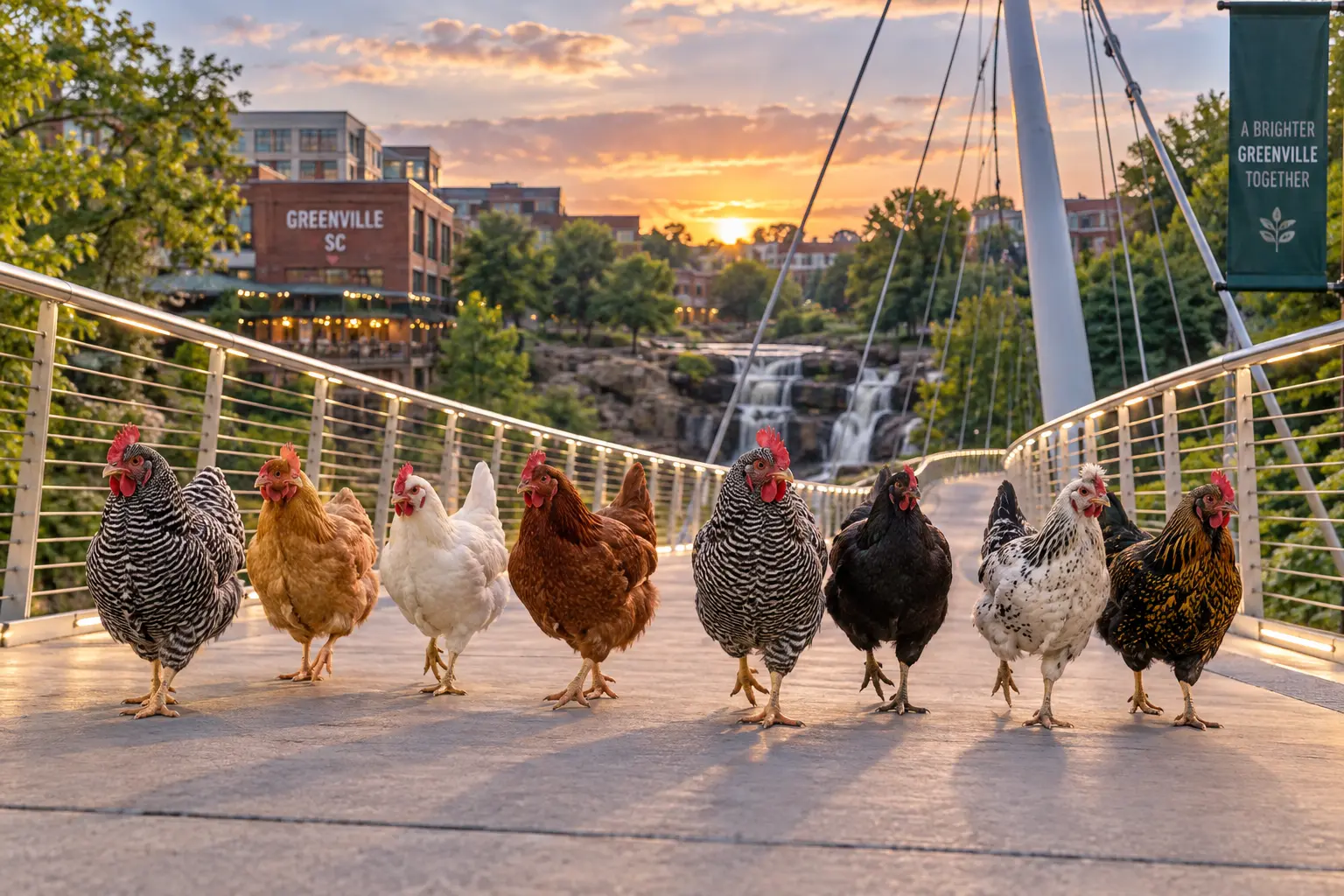
Beautiful enough for the estate.
Thoughtful enough for the city flock.
What we build
We don’t sell a catalog of prefab boxes. Every project begins with your home, your routines, your local rules, and the way you want your backyard to feel.
A permanent, premium home for smaller city flocks—designed around comfortable cleaning, egg collection, airflow, and your existing secured yard.
Discuss your henhouse →A custom henhouse, covered run, predator-conscious enclosure, paths, utilities, and thoughtful integration into the surrounding property.
Plan a complete estate →Chicken-friendly planting, protected forage, shade, drainage, screening, and landscape details that make the habitat feel like it belongs.
Explore habitat design →The founding build · Greenville, SC
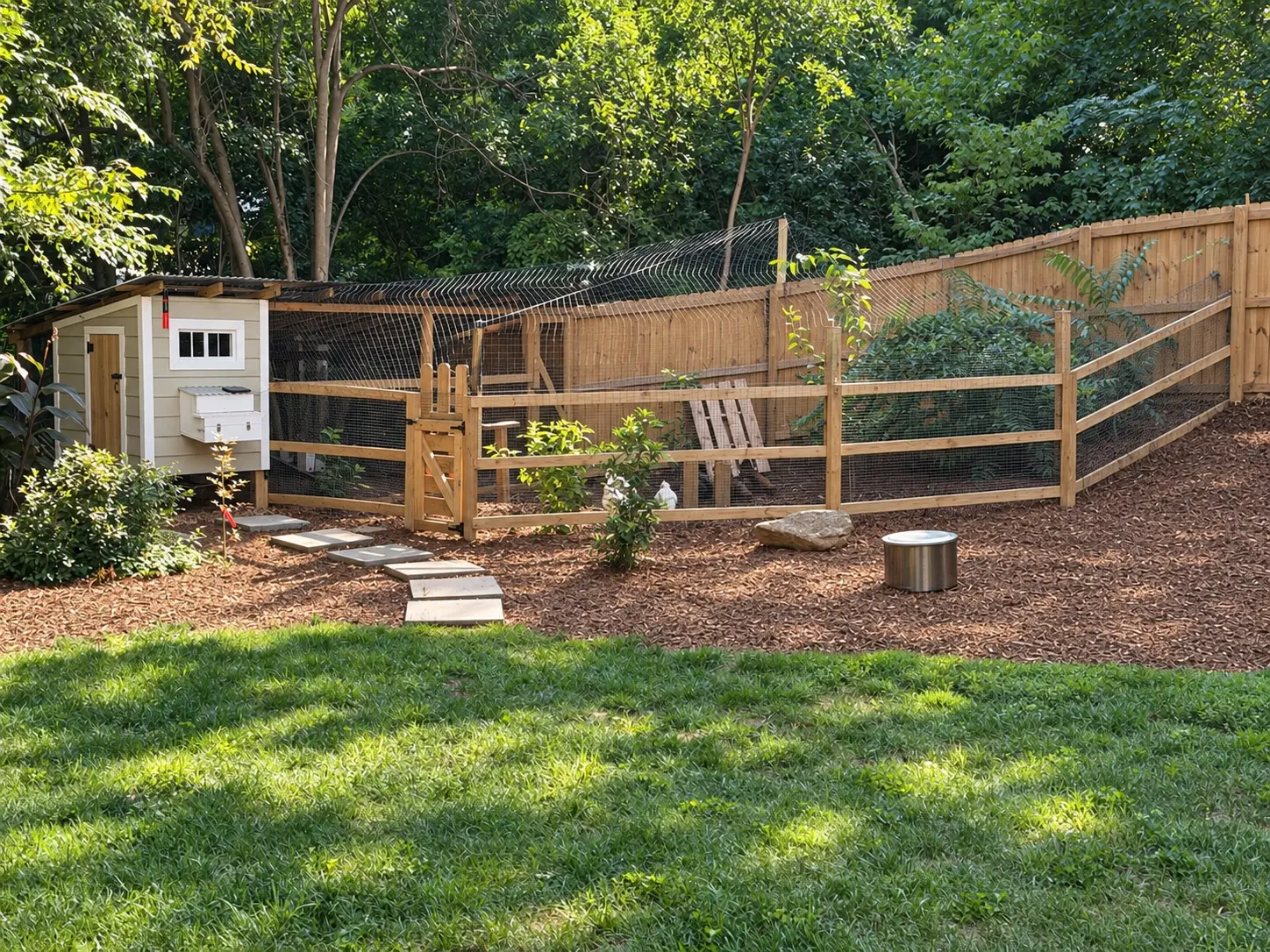
This company began with one real city flock and a complete backyard habitat—coop, covered run, protected outdoor space, paths, shade, and plantings designed to work together.
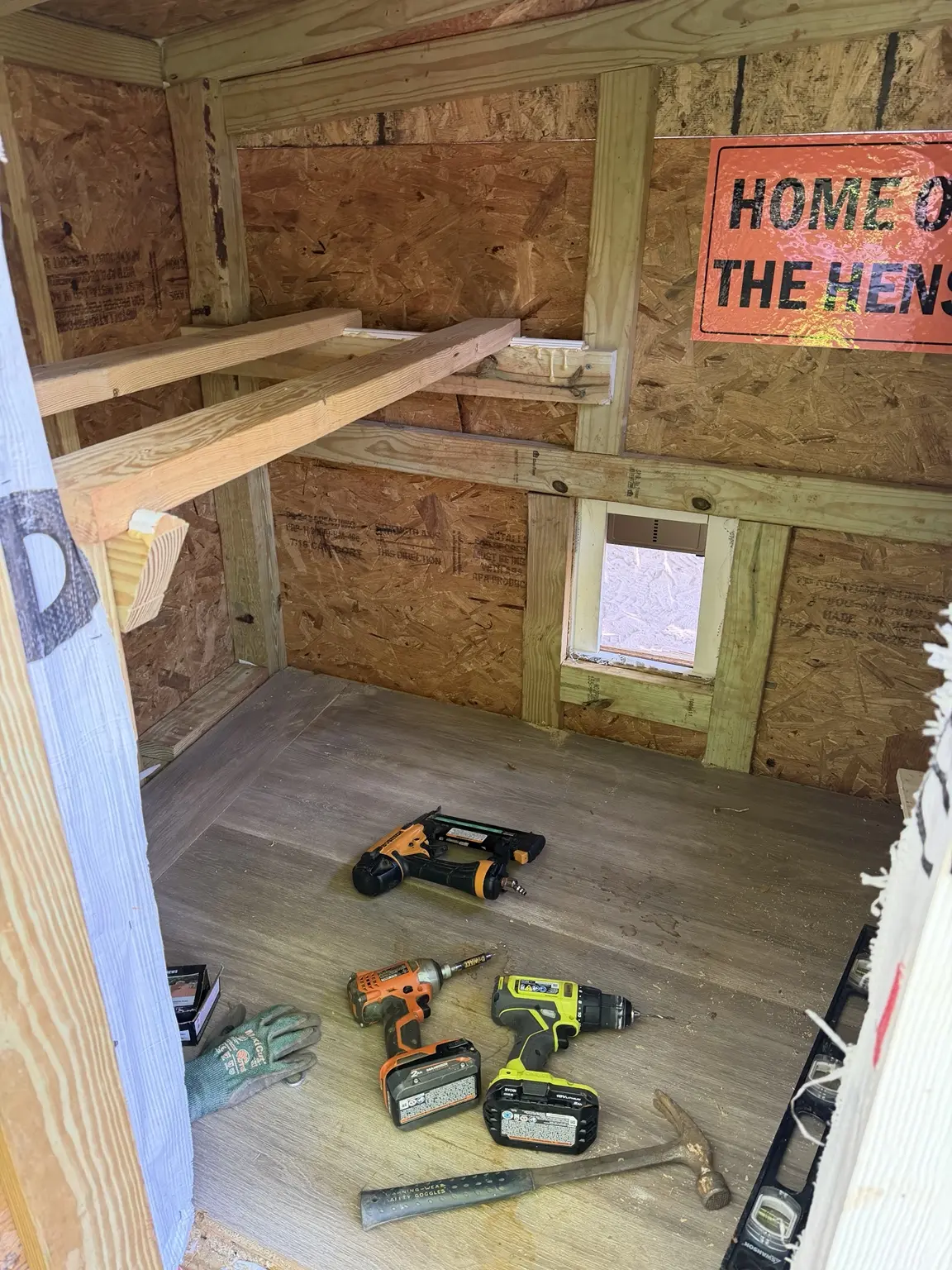
Real project photography from the founding build. No stock project images.
From the coop chronicles
Real footage from the build—and everyday life with the finished Greenville flock habitat.
The build
Watch the founding estate take shape through hands-on construction, careful layout, and the details that turn a backyard structure into a working home for chickens.
Watch on YouTube ↗Ready for eggs
A working look at the completed space as the flock moves into its next chapter.
Watch on YouTube ↗Daily life
The best test of a habitat is how naturally the flock settles into it.
Watch on YouTube ↗The Backyard Estate Protection Standard
No structure can promise nature will never find a way in. But careful materials, transitions, closures, and daily-use design can eliminate the easy opportunities.
Small-opening welded hardware cloth
Reinforced doors & two-step latches
Protected high-and-low ventilation
Ground-level digging protection
Sealed roof & wall transitions
Rodent-conscious feed storage
Covered-run & hawk protection
Final entry-point inspection
Builder × chicken keeper × gardener
Beyond the coop
Chickens don’t live in isolation from the landscape. We can shape the space around them with protected edible plantings, seasonal shade, dust-bathing areas, drainage, screening, pathways, and gardens that make good use of composted manure.
Built by a city-flock keeper
Backyard Estate Coops grew from the firsthand work of creating a beautiful, functional, highly protected habitat for a family flock in Greenville.
This is an owner-led studio—not a production builder. We accept a limited number of projects so each one gets hands-on attention to construction, flock care, garden integration, and the realities of neighborhood life.
Local flock planning
A mailing address does not always identify the governing jurisdiction. We check whether a property is inside city limits or in an unincorporated county area before investing time in a design that may not fit the rules.
The city code does not state a fixed hen limit. Chickens are handled through animal-nuisance standards, so noise, odor, sanitation, confinement, and effects on neighbors matter. The often-quoted eight-chicken limit is not the City of Greenville rule.
City municipal code ↗Applicable residential rules generally allow up to eight chickens, prohibit roosters, require backyard confinement and sanitation, and treat a coop or enclosure as a permitted accessory structure.
County zoning ordinance ↗The city allows up to six hens and no roosters. A permit and written consent from every adjoining property owner are required. The enclosed, washable coop must be in the rear yard and at least 50 feet from the nearest neighboring residence.
City requirements & consent form ↗City Code §90.35 generally prohibits chickens in city limits because they are classified as farm animals. The exception is property classified as farm property for property-tax purposes by Pickens County.
City Code §90.35 ↗The city allows up to five hens at an owner-occupied, single-family detached home with a zoning permit. Roosters are prohibited. A predator-proof coop and attached run are required, with size limits, accessory-structure setbacks, and 40 feet from a neighboring main building.
City chicken standards ↗The city generally allows six hens, requires an annual permit and neighbor consent, and applies a 50-foot separation rule.
City chicken guidance ↗The city generally allows four hens with a permit and adjoining-neighbor permission. County rules require parcel-level review.
City code ↗General animal and nuisance provisions can affect flock size, especially on lots under one acre and homes with other pets.
City ordinances ↗Last reviewed September 15, 2026. Ordinances, zoning requirements, permits, and private covenants can change. This information is for preliminary planning only; property owners must verify current requirements with their municipality, county, and homeowners association.
Rooted in trusted South Carolina guidance
Our planning is informed by official city and county requirements and practical guidance from Clemson University on small-flock management, poultry health, gardening, soils, heat, and the South Carolina growing environment.
Explore Clemson’s small-flock guidance ↗Start your coop design
We currently consider custom projects within approximately 100 miles of Greenville, South Carolina. Share a few details and we’ll begin with fit, location, and scope.
A detailed inquiry helps an owner-led studio protect your time—and ours.